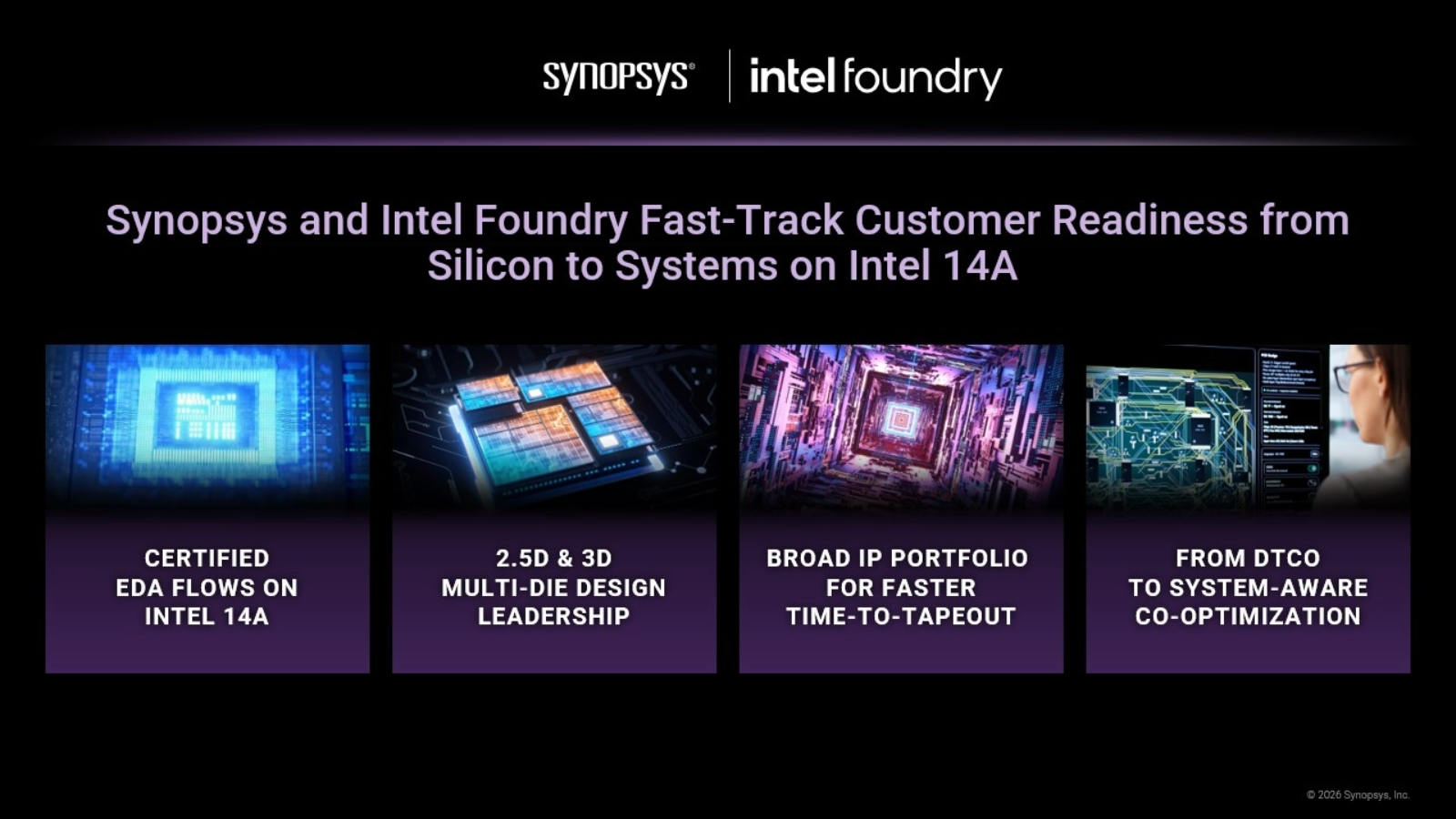
Synopsys and Intel Foundry have announced a fruitful collaboration, underscoring the potential to drive significant advancements in semiconductor design technology. Utilizing Intel’s 14A process technology, Synopsys certified AI-driven design automation and multiphysics analysis tools intend to hasten the development of Angstrom-scale AI and multi-die configurations, emphasizing the need for system-level integration.
Key Highlights
- The partnership enables Synopsys and Intel Foundry to provide comprehensive design support from silicon to systems.
- Key benefits include reducing late-stage design rework and achieving first-pass silicon success.
- Synopsys' IP offerings for Intel 14A intend to lower integration risks and shorten time-to-market.
Intel’s 14A marks a new chapter in semiconductor manufacturing, leveraging Synopsys’ expertise to propel innovations in high-performance computing (HPC) and AI-driven applications. By aligning its capabilities with Intel Foundry’s strategic roadmap, Synopsys is poised to not only enhance design predictability but also streamline processes from concept to system realization.
The strategic benefits of this collaboration are manifold. Synopsys enhances its market authority in electronic design automation (EDA) tools, expanding its influence over AI and multi-die technology sectors. For Intel Foundry, certified AI-driven design methodologies deepen its foundational capabilities, helping meet the growing requirements of ambitious digital designs.
Nevertheless, the collaboration isn’t without its risks. Successful deployment relies heavily on the timely and effective realization of Intel’s 14A technology. Given the competitive landscape, other EDA companies may fall behind without capacities to match Synopsys’ innovative pace, potentially reshaping market dynamics.
In capturing the momentum of co-design innovations, Synopsys continues to trailblaze, setting benchmarks for the industry’s future. The initiatives, if accomplished as envisioned, promise a new standard for what is achievable in semiconductor design, where AI and HPC stand at the forefront of success.
Story by EDA Times Staff. Originally reported by Synopsys Newsroom.