
Key Highlights & Insights
- NVIDIA's Vera CPU offers double the efficiency and 50% faster performance compared to traditional CPUs, specially designed for agentic AI and reinforcement learning.
- Vera CPUs feature 88 custom-designed Olympus cores with high-bandwidth memory subsystems for superior AI throughput.
- The Vera CPU is widely adopted by major companies like Alibaba Cloud, Meta, and Oracle, with extensive support from global tech manufacturers.
- The integrated high-speed interconnect technology allows seamless CPU-GPU collaboration, boosting efficiency in AI computations.
- Vera's introduction marks NVIDIA's strategic move to redefine computing infrastructure amid the evolving landscape of AI, aiming to democratize access to advanced AI tools and platforms.
Introduction
NVIDIA has once again revolutionized the computing landscape with the launch of the NVIDIA Vera CPU. Announced at the GTC 2026 event, this new processor is tailored specifically for agentic AI, boasting unprecedented efficiency and speed — double that of traditional CPUs. As AI systems evolve to require more nuanced reasoning and interaction capabilities, the infrastructure supporting these models must meet rigorous demands. The Vera CPU stands at the forefront, providing a compelling solution for AI training and inference at a scale previously unseen.
Unparalleled Performance
The NVIDIA Vera CPU draws upon the successes of the NVIDIA Grace™ CPU, pushing boundaries in AI throughput and responsiveness. At its core, the Vera promises the highest single-thread performance and bandwidth per core, crucial for handling the demands of large-scale AI services and enterprise agents. By delivering up to twice the efficiency and 50% faster speeds, it offers significant upgrades in performance and cost-effectiveness.
Vera integrates a revolutionary memory subsystem leveraging LPDDR5X, capable of delivering a bandwidth of 1.2 TB/s—double the previous capacity and half the power consumption of general-purpose CPUs. This creates an ideal environment for handling complex AI tasks, reinforced by the introduction of the second-generation NVIDIA Scalable Coherency Fabric.
Designing for the Future of AI
With the advent of agentic AI—where systems possess self-directed reasoning and action capabilities—the need for robust processors is paramount. NVIDIA delivers with Vera, designed to manage multiple high-demand tasks efficiently. Each of its 88 custom Olympus cores can handle two tasks concurrently using NVIDIA Spatial Multithreading, ensuring minimal performance variance even in multi-tenant AI factories.
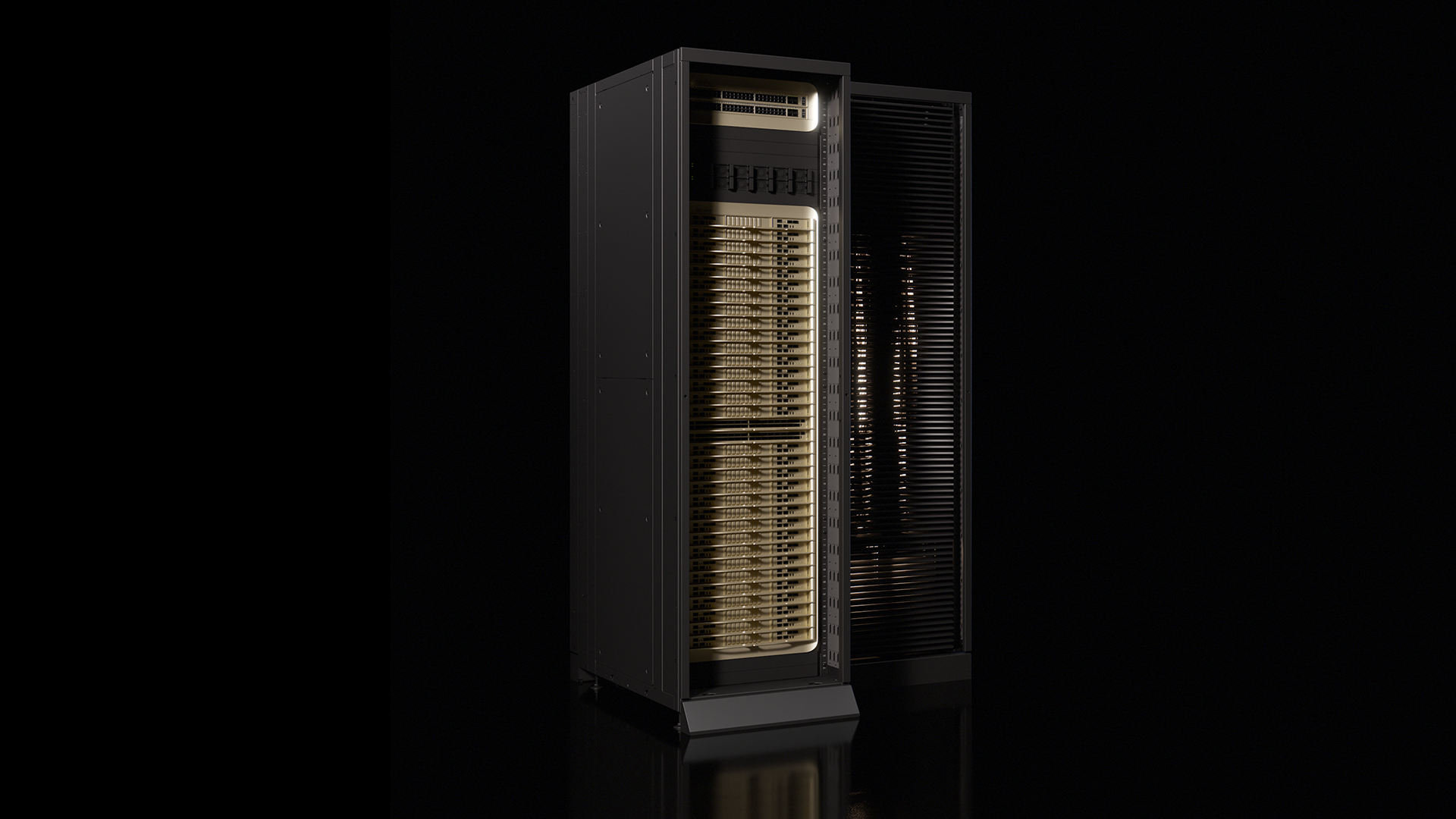
The versatility of the Vera CPU is evident in its configurability for varied data center needs, with a 256 liquid-cooled CPU rack supporting over 22,500 environments at peak performance. Moreover, its integration into the NVIDIA Vera Rubin NVL72 platform highlights its capacity to work seamlessly with NVIDIA GPUs, utilizing NVLink™-C2C interconnect technology for rapid data interchange.
Industry Adoption and Ecosystem Support
The Vera CPU is set to redefine the AI landscape, evidenced by its wide adoption across leading global companies. Partners such as Alibaba Cloud, ByteDance, Meta, and Oracle are already integrating Vera into their operations, alongside technology stalwarts like Dell Technologies, HPE, and Lenovo.
Beyond cloud service and hardware providers, innovative firms such as Cursor and Redpanda are leveraging Vera to enhance their AI-native software and streaming services, respectively. Notably, Redpanda reports a remarkable 5.5x decrease in latency when utilizing Vera for Apache Kafka workloads, showcasing the CPU’s transformative potential for real-time data processing and agentic AI applications.
Conclusion
In conclusion, NVIDIA’s Vera CPU represents a significant leap forward in compute architecture for AI, marrying speed with energy efficiency to support next-generation tasks in agentic AI and reinforcement learning. As it becomes widely available later this year, Vera is poised to become a foundational component in the AI ecosystems of various industries, fostering innovation and democratizing access to cutting-edge AI capabilities.
Report compiled by EDA Editorial Desk. Content and images sourced from original announcements published by Nvidia stock. This analysis constitutes transformative, educational news aggregation.