Key Highlights & Insights
- Digital twins in chipmaking simulate the GAA logic process upfront, minimizing experimental costs.
- Machine learning engines significantly boost yield rates, turning digital insights into real-world solutions.
- This virtual methodology offers a cost-effective way to accelerate complex node manufacturing as devices become more intricate.
Unlocking the Mysteries of Chipmaking with Digital Twins
Transitioning from FinFET to Gate-All-Around (GAA) architectures in chip manufacturing is kind of like advancing to the boss level in your favorite video game. It’s exciting but way more complex. And this transition doesn’t just make life tricky for gamers—chip designers, too, are facing headaches thanks to manufacturing variability. That’s where digital twins step in.
Why it Matters
In places like Silicon Valley, where chip design is practically a local pastime, understanding and controlling these GAA architectures are all the rage. And it’s not about who’s got the coolest tech; it’s about making it work efficiently and effectively. What if you could have a digital twin of your entire GAA logic fabrication process? Well, that’s precisely the magic trick Lam Research is performing in this little corner of the world, and it’s grabbing everyone’s attention.
Virtual Takes Over Physical
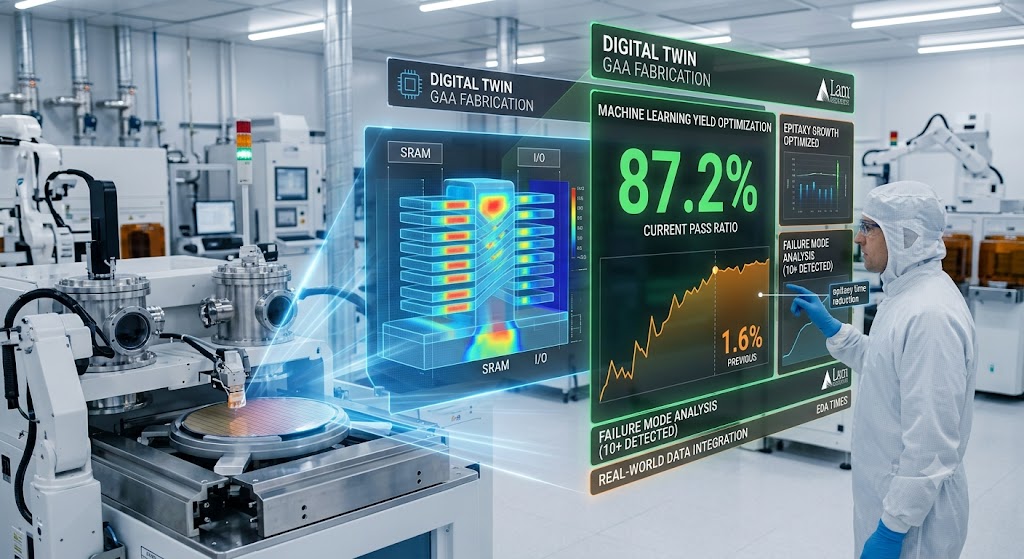
Forget the old days of endlessly tweaking wafers in the lab—now, engineers use digital replicas to simulate every possible scenario ahead of time. These virtual processes mimic every step in the chipmaking journey, from SRAM to I/O regions, in this GAA fantasia. The digital twin gives you the ability to identify and tackle more than ten different failure modes before they bite you in the silicon. And best of all, it’s done following real-world data so you can trust what you’re seeing.
Machine Learning: A Sidekick to Digital Twins
Good news: machine learning isn’t just for your Spotify playlist or predictive text anymore. It’s used here to optimize the fabrication process by crunching numbers faster than you can say ‘Silicon Valley’. The goal? Achieving a pass ratio leap from a meager 1.6% to a jaw-dropping 87.2%. Now that’s the kind of swing you tell everyone about, whether in the lab or local coffee chat at Santana Row.
Moving Forward with Confidence
These digital twins don’t just analyze the problem; they spit out concrete, actionable solutions that can be put into the manufacturing sequence pronto. Suddenly, things like reducing epitaxy growth time become not just theoretical discussions but real targets you can tackle next week in the production line. This isn’t just for geeks; it’s solving real problems for engineers at scale.
What’s Next?
EDA Times, along with Lam Research, is paving the road for tech enthusiasts actively invested in the future of chip design. By embracing these digital twins, we’re looking at a more efficient, and yes, less expensive way to innovate in increasingly complex tech. Keep your eyes on this space because it’s set to evolve faster than the code running on those chips.
Report compiled by EDA Editorial Desk. Content and images sourced from original announcements published by LAM. This analysis constitutes transformative, educational news aggregation.