
Key Highlights & Insights
- AMD's $10 billion investment in Taiwan is aimed at boosting AI infrastructure capabilities through advanced packaging technologies.
- Advanced packaging approaches such as Enhanced Fanout Bridge (EFB) technology are pivotal in maximizing performance and efficiency of AMD CPUs.
- The deployment and manufacturing of the Helios platform involves key partnerships with technology firms like Sanmina and Wiwynn, focusing on scalability and performance.
- AMD continues to lead in AI innovation by integrating cutting-edge silicon technologies with global partnerships.
- The investment reinforces the significance of Taiwan's tech ecosystem in the global semiconductor supply chain.
Accelerating AI Infrastructure Investments
In a landmark move, AMD has announced an investment exceeding $10 billion focused on Taiwan’s burgeoning tech ecosystem. This initiative is aimed at revolutionizing AI infrastructure by amplifying strategic alliances and progressing advanced manufacturing and packaging technologies. The goal is to meet the accelerating global demand for AI capabilities by leveraging significant gains in performance and efficiency.
Pioneering Technologies
Central to these efforts is the development of Enhanced Fanout Bridge (EFB) technology. This advanced packaging approach is set to improve interconnect bandwidth and efficiency, facilitating the effectiveness of AMD’s 6th Generation EPYC CPUs, codenamed “Venice.” By partnering with industry leaders such as ASE, SPIL, and PTI, AMD is working on innovative solutions like the industry’s inaugural 2.5D panel-based EFB interconnects. This technology promises to enhance the scalability and economic viability of AI systems by supporting high-bandwidth interconnection at a large scale.
AMD Helios Platform
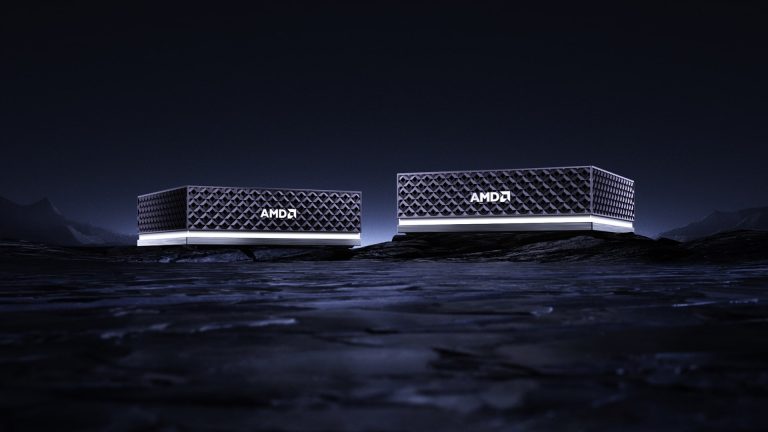
A key outcome of these partnerships and technological advances is the anticipated deployment of the AMD Helios rack-scale platform. Expected in the latter half of 2026, this platform will be powered by AMD’s latest technological innovations, including the Instinct MI450X GPUs and 6th Gen EPYC CPUs. It is designed to deliver outstanding AI performance, allowing enterprises to manage larger and more complex workloads effectively.
Strategic Partnerships
The deployment and manufacturing of the Helios platform will be supported by industry heavyweights, including Sanmina, Wiwynn, Wistron, and others, highlighting a collaborative approach in AMD’s strategy. These alliances are instrumental not only in enhancing the manufacturing capabilities but also in ensuring the high-volume availability of AMD’s innovative solutions.
Global Impact and Leadership
With these initiatives, AMD cements its status as a leader in high-performance computing, demonstrating significant strides in both the chip-design and AI spaces. The company’s strategic focus on Taiwan as a pivotal player for its advanced tech ecosystem underscores the importance of global partnerships in driving technological evolution and meeting market demands for energy-efficient, powerful AI infrastructure.
By focusing on the core aspects of silicon innovation, packaging, and system design, AMD is prepared to support its clients in accelerating the deployment of next-gen AI systems. The advancements introduced through EFB technology, combined with the Helios platform, are testaments to AMD’s commitment to pushing the boundaries of AI computing.
As the tech world keenly watches these developments unfold, AMD’s significant financial injection into the Taiwanese ecosystem not only highlights AMD’s dedication to enhancing AI infrastructures but also sheds light on the essential role strategic global collaborations play in navigating the future of technology.
Report compiled by EDA Editorial Desk. Content and images sourced from original announcements published by AMD. This analysis constitutes transformative, educational news aggregation.